.png)
.png)

Why Clean Up An Oil Spill ?
-
We clean up oil spills to remove toxicity, so single-cell organisms can survive.
-
If single-cell organisms can survive, then the rest of the food chain is ok.
-
If single-cell organisms can not survive, the toxicity is transferred up through and affects the whole system, including human beings.
The difference between
Bioremediation vs Biostimulation
The terms BioRemidiation and BioStimulation are often misunderstood. BioStimulation is basically Bioremediation with local bacteria and local micro organisms.
When OSE II manufacture in their literature refers to Bioremediation product without bacteria, it is what we now refer to as Biostimulation.
OSE II does not contain any bacteria or micro organisms.
Conclusion: OSE II is by this definition a Biostimulation product.
Below are the best definitions of Bioremediation and BioStimulation.

What is Bioremediation?
Oxford dictionary
bi·o·re·me·di·a·tion
/ˌbīōrəˌmēdēˈāSHən/
noun
The use of either naturally occurring or deliberately introduced microorganisms or other forms of life to consume and break down environmental pollutants, in order to clean up a polluted site.
Wikipidia
Bioremediation broadly refers to any process wherein a biological system (typically bacteria, microalgae, fungi in mycoremediation, and plants in phytoremediation), living or dead, is employed for removing environmental pollutants from air, water, soil, fuel gases, industrial effluents, etc., in natural or artificial settings.
What is Biostimulation?
Oxford dictionary.
Bio-stimulation involves the modification of the environment to stimulate existing bacteria capable of bioremediation.
Wikipedia
Bio-stimulation involves the modification of the environment to stimulate existing bacteria capable of bioremediation.
AI Overview
Biostimulation, in the context of environmental remediation, refers to the process of enhancing the activity of naturally occurring microorganisms in a contaminated area to break down pollutants. It involves modifying the environment to encourage the growth and activity of these microbes, primarily by adding nutrients or other substances that the microbes need to thrive. This stimulates the microbes to degrade contaminants more effectively.

How does
OSE II work?
Nature's own mechanism and how OSE II helps.
OSE II is a non-toxic...
How OSE II Works: Three-Pronged Attack
1. Immediately attacks the molecular structure of the hydrocarbons, reducing toxicity to microorganisms.
2. Provides enzymes to act as catalysts, increasing metabolic breakdown
3. Provides nutrients to enhance microbial action
-
Emulsification: When OSE II is mixed with water and applied to a spill, the enzymes and biosurfactants in OSE II break the surface tension of the oil. This causes the oil to break apart into much smaller droplets, or micelles.
-
Detoxification: By breaking the oil into tiny particles, OSE II also rapidly reduces its toxicity and stickiness, or adhesion properties.
-
Biodegradation: The OSE II product does not contain bacteria, but instead provides nutrients that stimulate the growth of the local, indigenous bacteria already present in the environment.
-
Consumption: With the oil now detoxified and broken into smaller droplets, the enhanced bacteria can safely and efficiently consume the contaminant.
-
Permanent removal: The end result of this process is the permanent conversion of the hydrocarbons into harmless carbon dioxide (CO2) and water (H2O).

OSE II - Mechanisms of Action
OSE II emulates mother natures own process, except OSE II speeds the process up to reduce hydrocarbons in a matter of days or weeks in stead of decades or not all (in some scenarios).
OSE II Biosurfactants & Enzymes– Their mechanism of Action.
When hazardous material is spilled due to natural causes a process called bioremediation occurs to correct it. Bacteria that come in direct contact with the oil is killed however nearby bacteria react to the spill by separating themselves to protect against toxicity.
From a safe distance the bacteria will release enzymes and bio surfactants to attack the spill. These bio surfactants emulsify and solubilize the spill or breakup and partition the spill into a manageable consistency. Breakdown happens in the molecular structure of the oil, detoxifying, and turning it into a food source. Enzymes then form binding sites on the emulsified or solubilized spill; this is where the bacteria will initially attach themselves and start the digestive process.
In order for the process to start, there needs to be enough bacteria present at the spill to release enzymes and surfactants. Bacteria will naturally accumulate but cannot do so quickly enough to handle large, man-made spills. This is why you hear scientists express the need to add nutrients to jumpstart the rapid growth of bacteria and the bioremediation process.
However, the use of nutrients alone can have limited effects because of the time it takes to grow a large population of bacteria and the possibility that the nutrients will be washed away or diluted before bacteria even begin to grow. Wouldn't it be nice if there was a way to emulate Mother Nature while speeding up the process that can take months or years to just days, even hours?
OIL SPILL EATER II (OSE II) contains the enzymes, bio surfactans, nutrients and other necessary constituents for complete life cycles and biodegradation. When OSE II is added to a spill, there is no need to wait for the bacteria to release enzymes and bio surfactants because our product already supplies them. The solubilization process can begin in minutes, depending on the consistency of the spill. As the bio surfactants work, the enzymes attach themselves to broken down hydrocarbon structures, forming digestive binding sites.
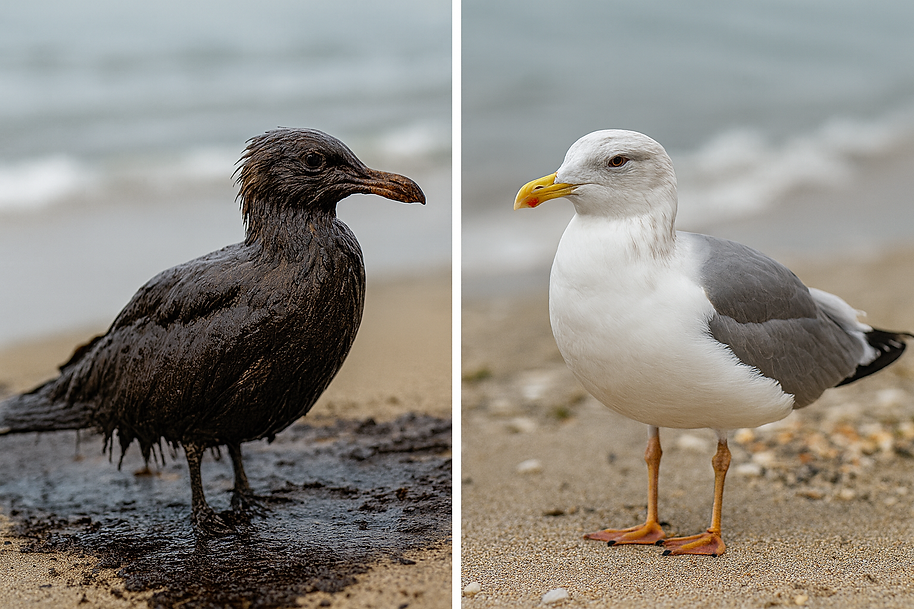
If the spill reaches shoreline after application, it will not adhere to sand, rock, wood, metal or vegetation. If the spill has already attached itself, once application occurs, it will be lifted from sand, rock, wood, metal and vegetation. The spill is now detoxified to the point that indigenous, natural bacteria can utilize the oil as a food source. This also diminishes toxicity to marine organisms, birds and wildlife.
OSE II causes the oil to float on the surface of the water, which reduces the impact to the sub-surface - preventing secondary contamination of the water column or tertiary contamination on the floor of the body of water associated with the spill area.
The spill being held on the surface will make it easy to monitor. OSE II also has an extremely efficient nutrient system that is activated once you mix OSE II with natural water. While the spill is being broken down, detoxified the indigenous bacteria in the natural water used to mix OSE II starts rapidly colonizing or proliferating the growth of large numbers of indigenous bacteria.
Once the bacteria run out of the OSE II readily available nutrients they convert over to the only food source left - the detoxified spill. The spill is then digested to CO2 and water. In some cases you can see bacteria growing on the spill, and the oil will be digested to CO2 and water before your eyes, on a contained spill.
In laboratory tests once you see the water in the test beaker or aquarium become turbid, you know it is only a matter of time before the contaminant is remediated to CO2 and water.
Unlike mechanical cleanup, which cleans up a maximum of 20% of the oil spilled, OSE II will actually address 100% of a spill. This information is substantiated by the EPA’s listing of OSE II on the USA National Contingency Plan for oil spills or the NCP list, which contains the efficacy test performed for the EPA at LSU University.
You can see this information at www.osei.us. This will link you to the EPA’s site with the OSE II listing, and information. Oil Spill Eater II emulates (copies) mother nature's process exactly.

Environmental advantages of using biostimulation vs other methods:
-
Clean up as much as 99-100% of the oil spill.
-
Reduce cleanup costs with as much as 80%
-
Animal friendly, saves lives of birds and fur animals.
-
Cleanup at the site of the spill, able to bring the cleanup site back to “pre-spill” conditions
-
Early intervention is able to significantly limit the spread of the oil spill
-
Small spills considered non-actionable with mechanical cleanup methods are now actionable, such as those involving Blueshine in marinas or 1,000 gallons spilled offshore.
-
Significantly Reduced Carbon footprint vs other methods of cleanup.
Reference Material
-
Lawrence Anthony Earth Organisation (LAEO)
-
Bioremediation of oil spills in harbours and on shorelines: A promising, cost-effective way to minimise environmental damage. First International Congress on Industrial and Harbour Scientific Research, Sept-Iles, Quebec, Canada
-
USA EPA Emergency Response OSE II
PowerPoint Presentations
-
PFOS/PFAS Remediation with OSE II
-
"Biostimulering ved akutte hendsler" PowerPoint presentasjon , Miljøringen seminar hos Miljøvern Direktoratet 15 Mars 2023 ved Halvor Gaasrud
Videos
-
Oil Spill Eater II on 21st Century Business
-
AGIP Brass terminal, Nigeria, 150,000-gallon spill
-
Steven Pedigo is presenting at the 6th International Conference on Environmental Science and Technology. June 2012.
-
Q&A Video
-
Saudi Arabia Aramco presentation and Q&A:
-
Part 1: Presentation with Q&A
-
Part 2: Q&A
-
-
Demonstration of OSE II in Houma, LA
-
SheenAway on Engine Oil in a Freshwater Pond
-
Creek ReferenceVideo
-
Open Water Reference Video